Climate Action in Howe Sound
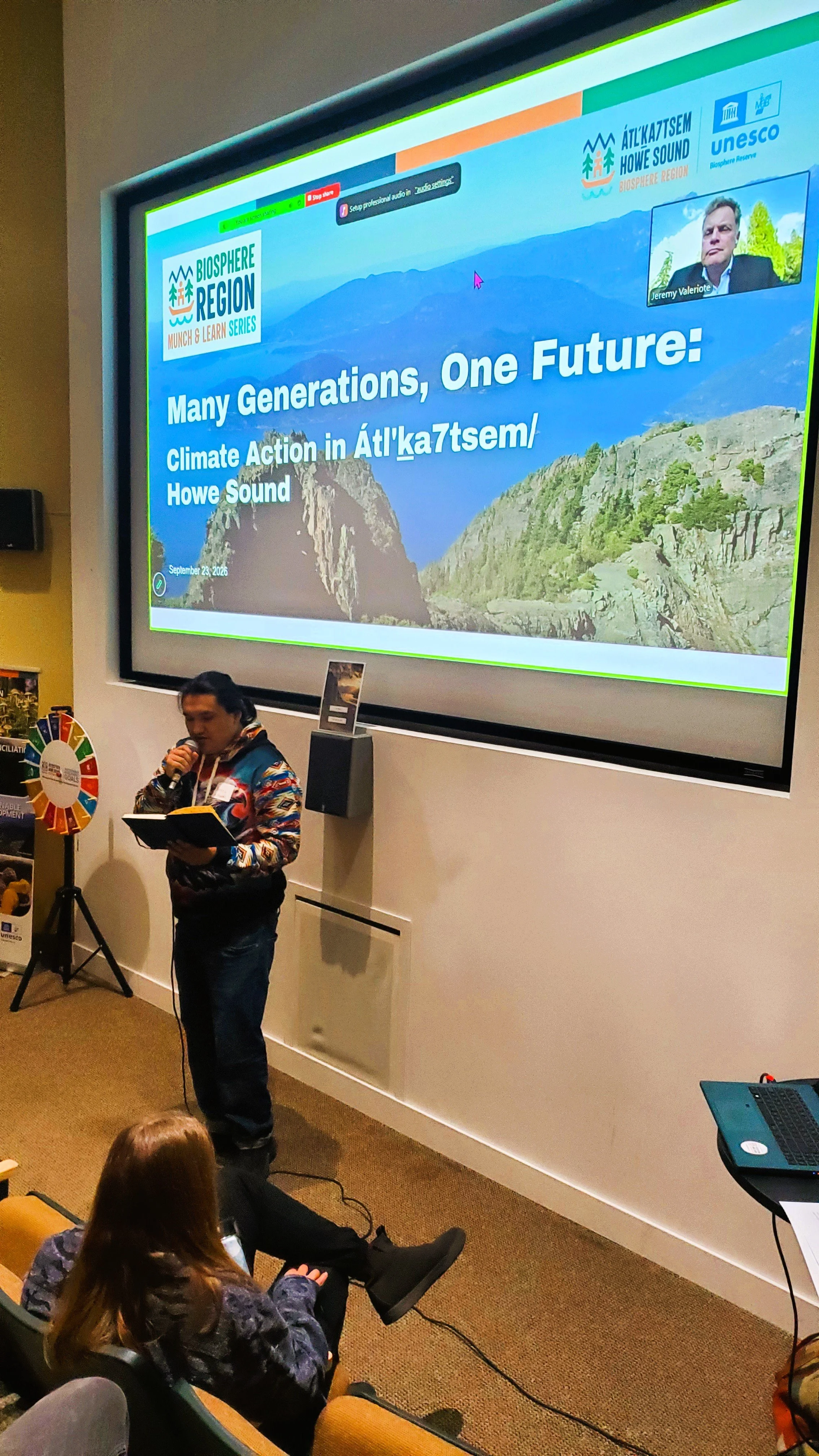
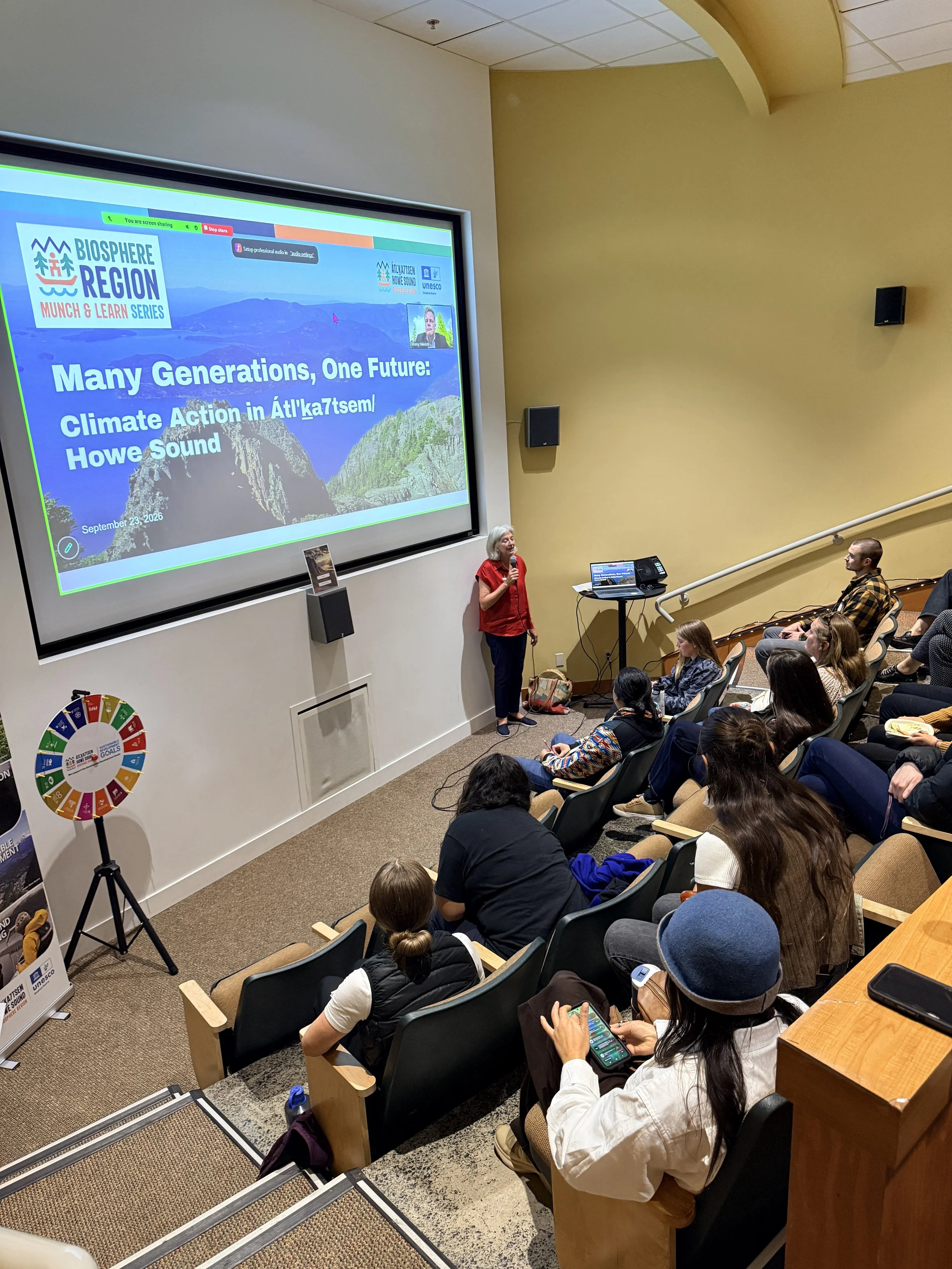
Bringing people together is one of the aspects of our work we enjoy the most, and our fourth Munch and Learn Series event at the Squamish Adventure Centre was no exception. The event, on the evening of September 23rd, saw 55 enthusiastic people attend our Many Generations, One Future: Climate Action in Howe Sound event. The Squamish Youth Climate Corps team helped to coordinate the event. Our M/C, Cheryl Cameron, pulled everyone together for an evening of great conversations and shared learning about actions underway that align with the Global Goals for Climate Action.
Jonny Williams started the event with an official welcome from the Sḵwx̱wú7mesh Úxwumixw.
Ruth Simons, our Executive Director, gave a brief introduction to UNESCO Biosphere Regions and the main program areas, focusing on Sustainable Development through the lens of the United Nations' 17 Sustainable Development Goals (SDGs). This evening, we focused on SDG #13: Climate Action and how local actions align with the global goals and specific targets. The event was to inspire action and the case for “stubborn optimism” on climate, as explained by Christiana Figueres.
MLA (candidate) Jeremy Valeriote joined us via Zoom on his way back from Victoria to share good news about the recent Memorandum of Understanding signed between the province and the SLRD on transportation. As the largest source of emissions in the biosphere region, public transit has long been a sought-after solution for reducing ever-increasing highway traffic. The MOU commits the parties to work together to plan an interregional transit service. The proposed service would link Sea-to-Sky corridor communities from Líl̓wat Nation to Metro Vancouver.
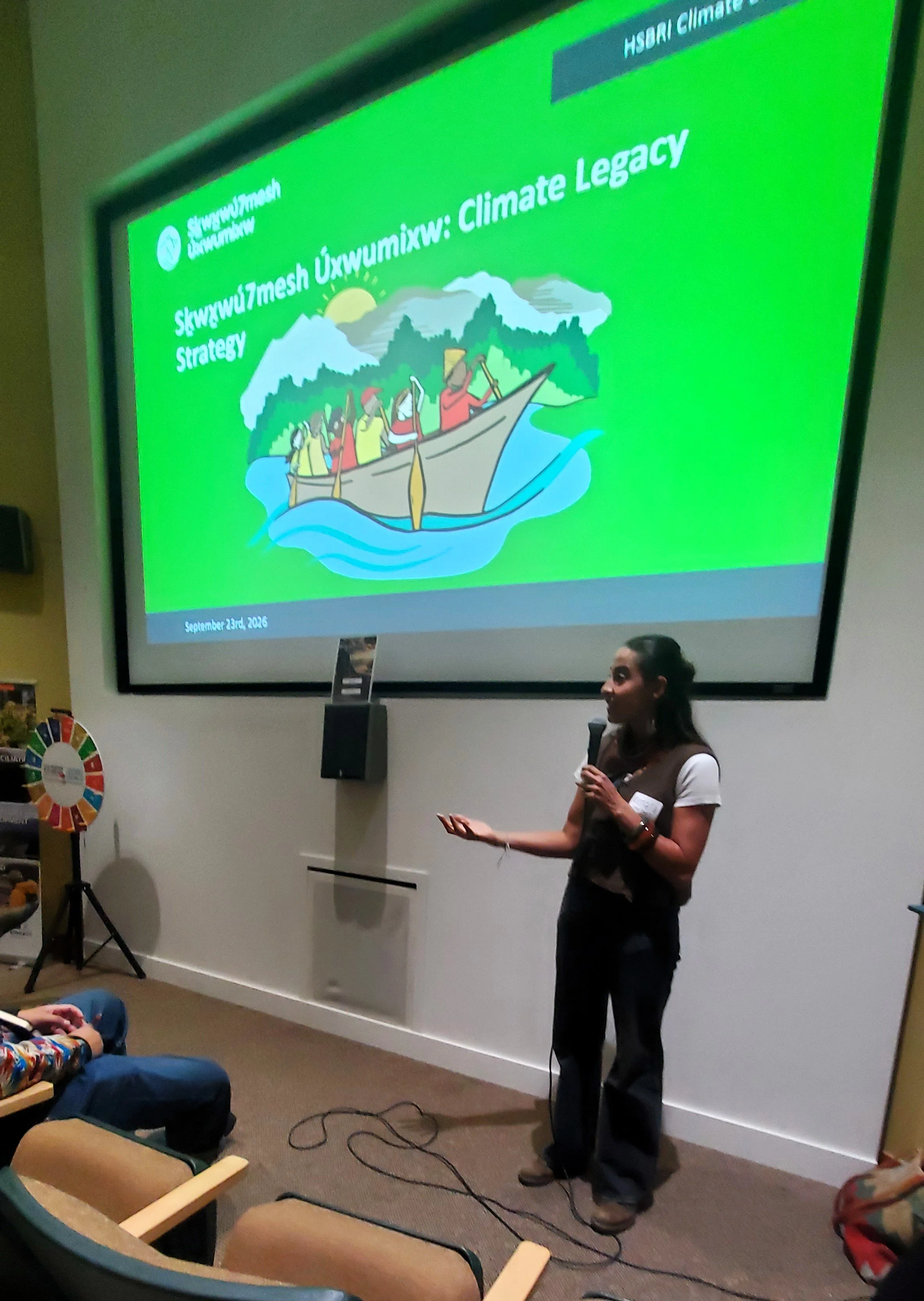
Julia Stafford, Climate Action Manager, and Renata Rovelo, Senior Climate Action Advisor for the Squamish Nation, shared an overview of the Nation’s Climate Action Legacy, explaining the process and the early successes they are having with actions being implemented, such as installing e-chargers, bike-sharing, retrofits, heat pumps and waste stations on reserves. These actions all help reduce greenhouse gas emissions.
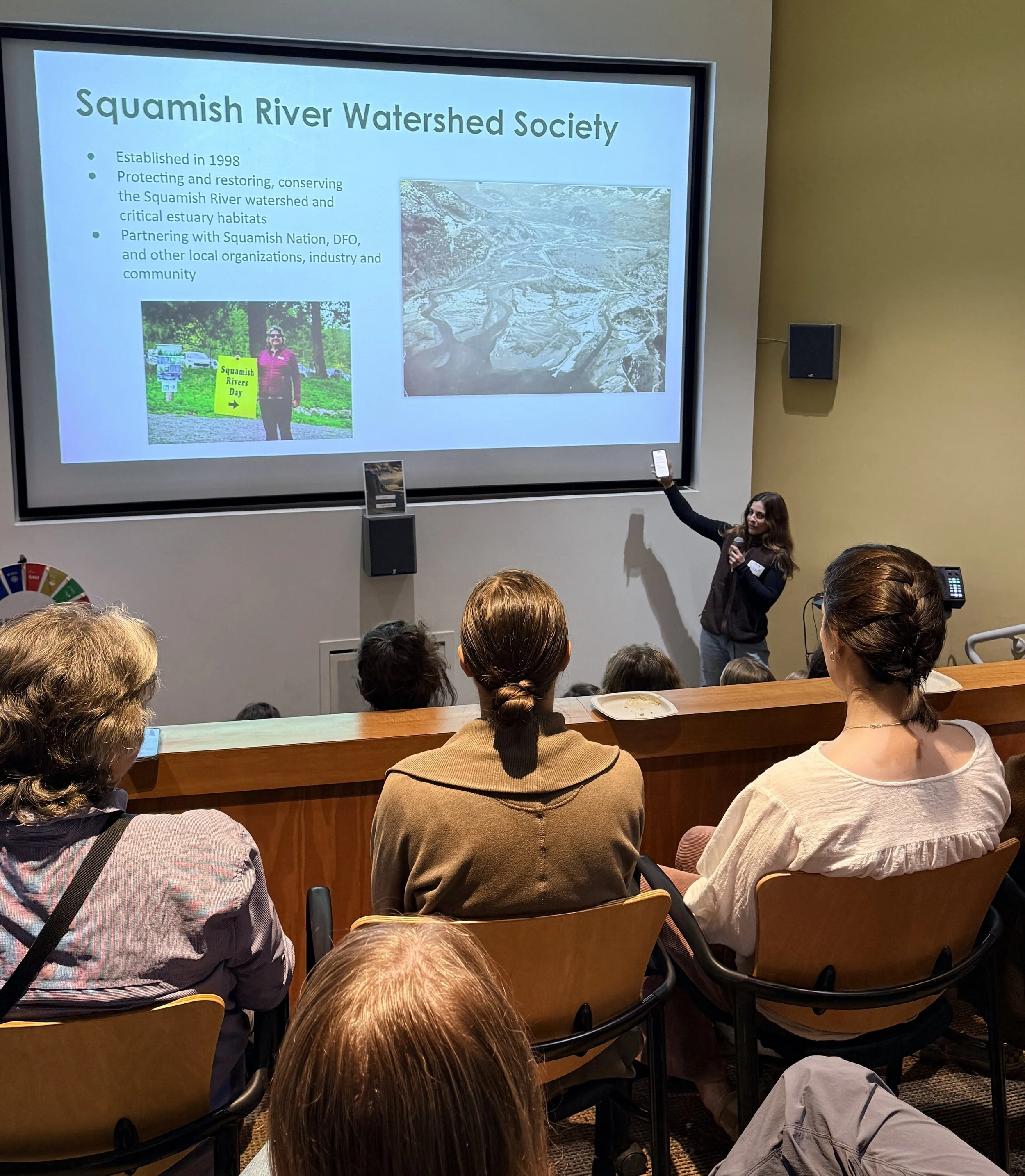
Silvi Cafarella, Education Outreach Coordinator and Field Technician for the Squamish River Watershed Society, shared slides on the many projects underway in the estuary to restore and monitor fish habitat, including the effects of climate change on water temperature and water quality. The major restoration work over the year has increased carbon sequestration and built resilience to sea-level rise and storm surges. The replanting has also increased biodiversity, as evidenced, and has been a main contributor to the area being recognized as a Key Biodiversity Area.
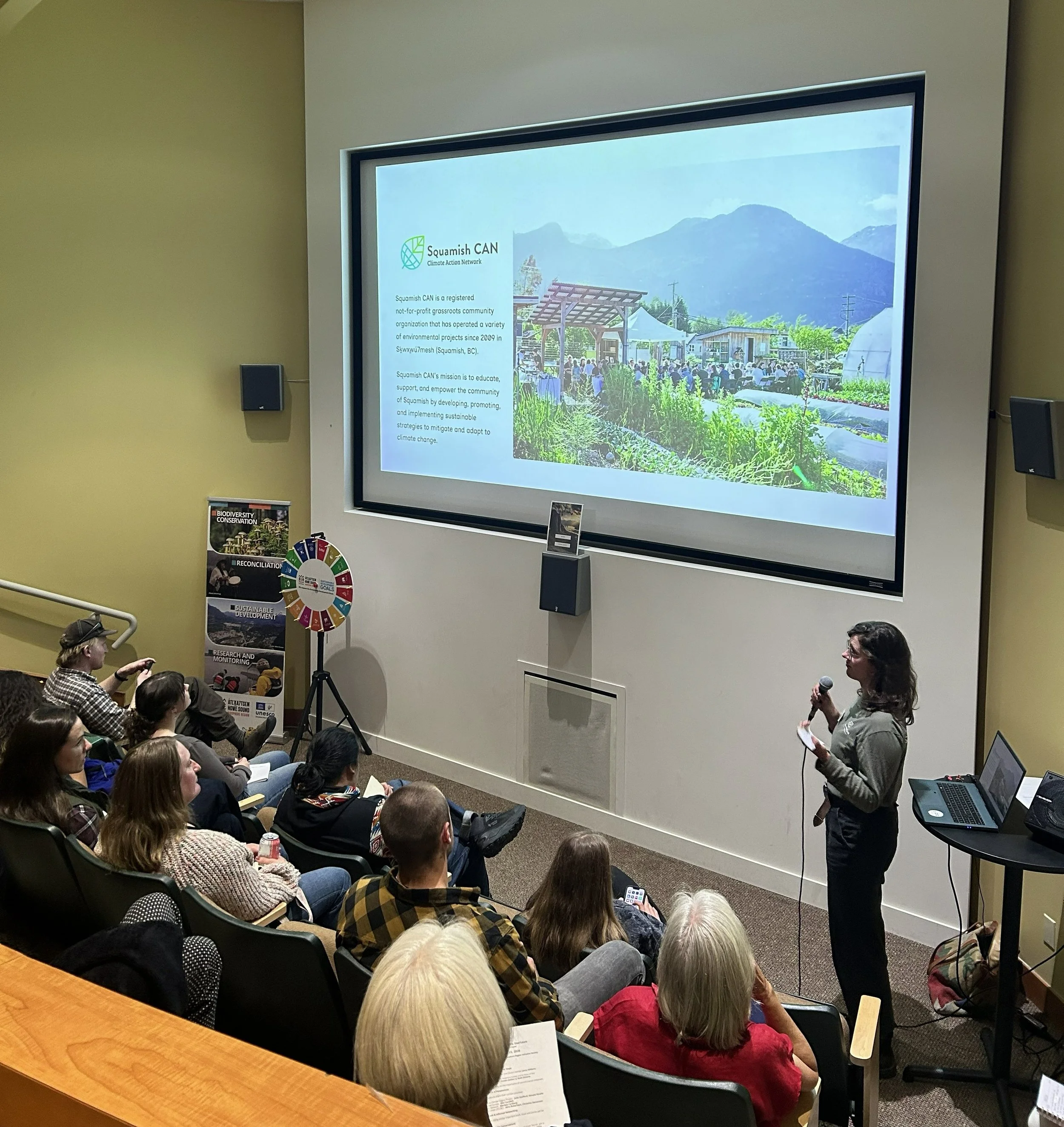
Marissa Carlberg, Community Food Systems Manager for Squamish CAN, spoke about the growth of the charity’s food security work. As food gardens expand throughout the Squamish community, buying locally grown vegetables reduces transportation costs, regenerates lands, and improves biodiversity. The work crosses many of the SDGs.
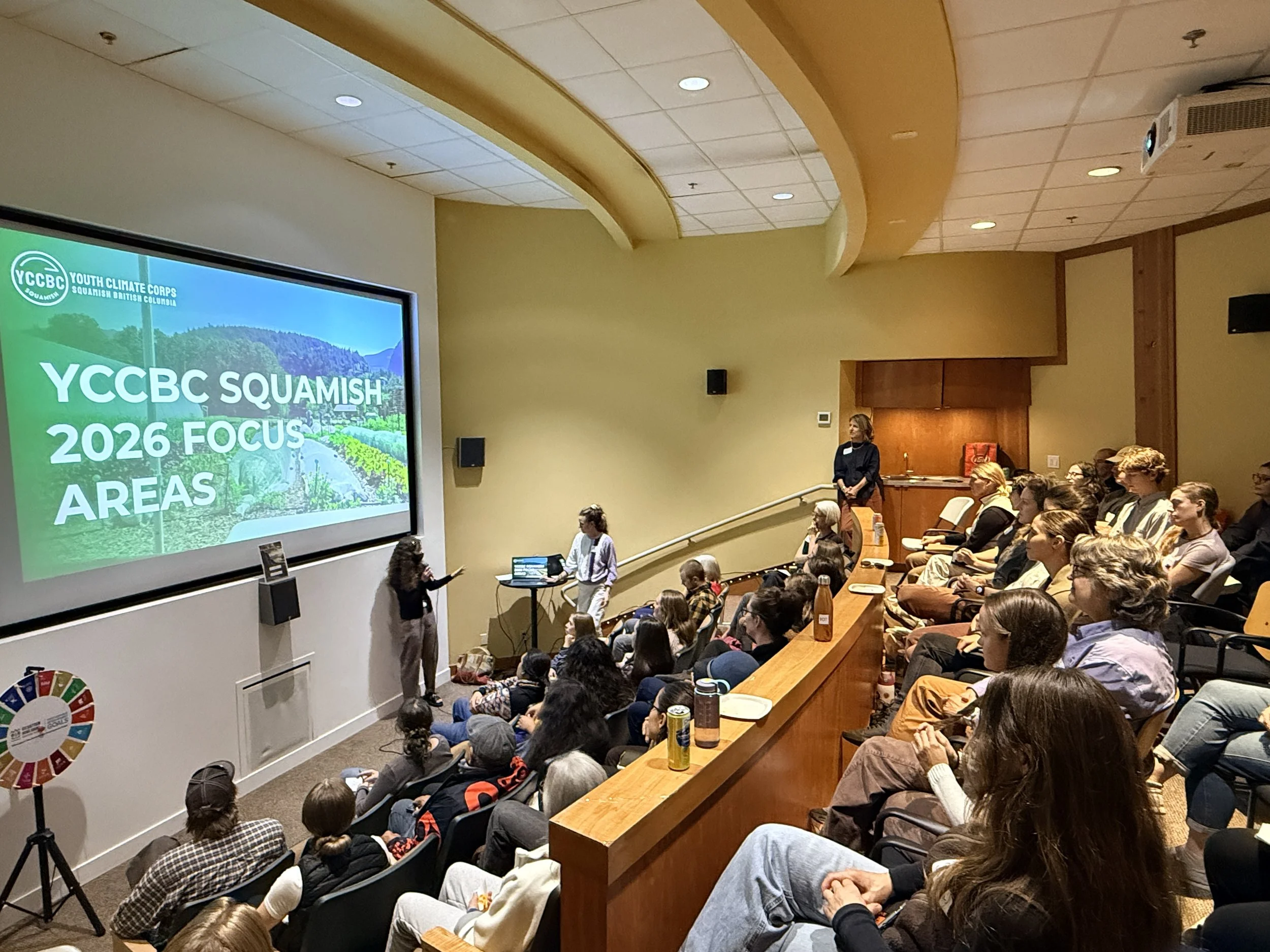
Christina Stevenson and Nina Robertson, Program Leads for the Youth Climate Corps of BC (SYCC), shared examples of some of the many projects the team conducted over the summer. This is the third year the group have been supported by the District of Squamish. Projects address the climate/economic crisis through improving energy efficiency, decarbonaizing transportation, waste diversion and more.
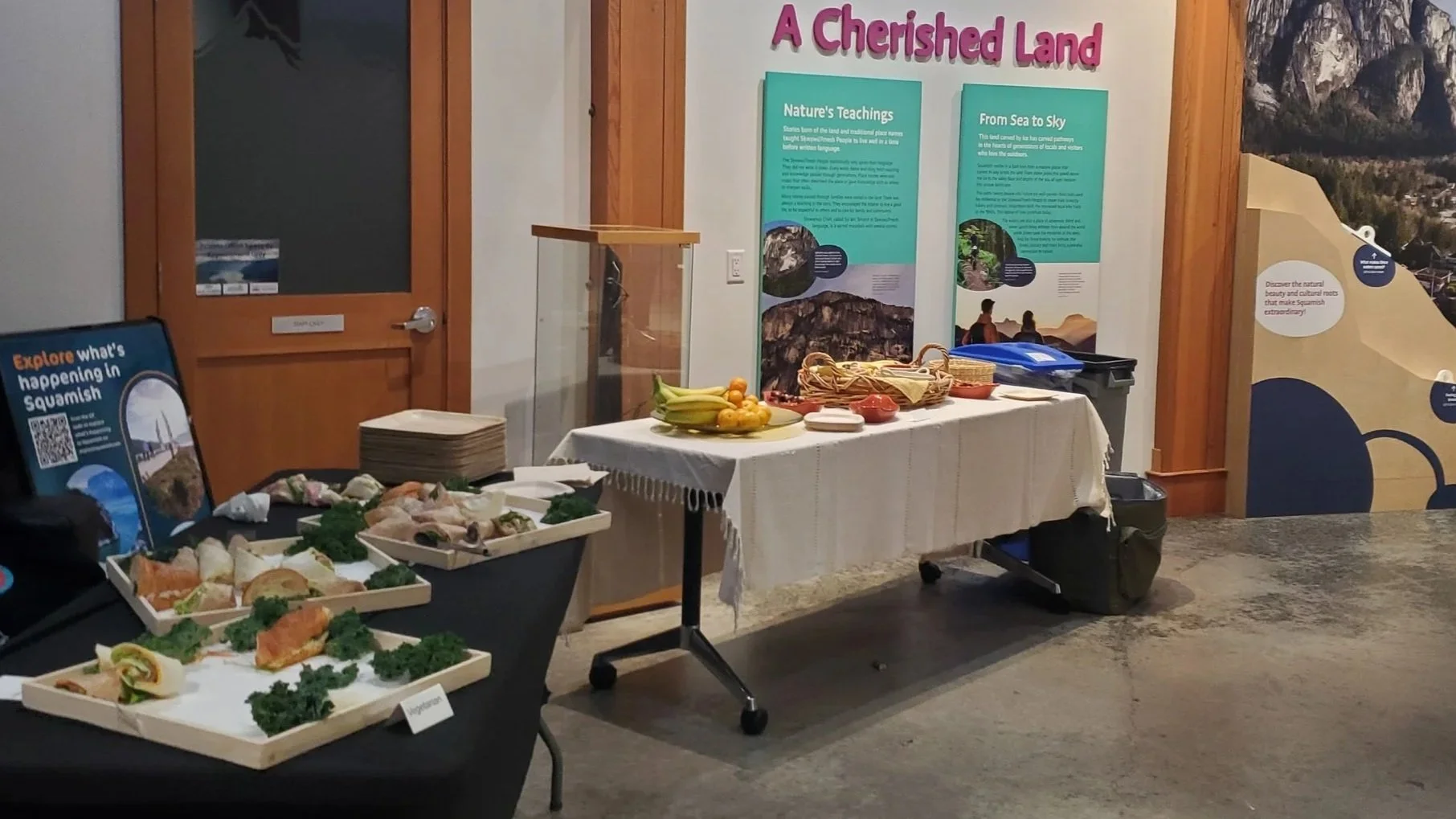
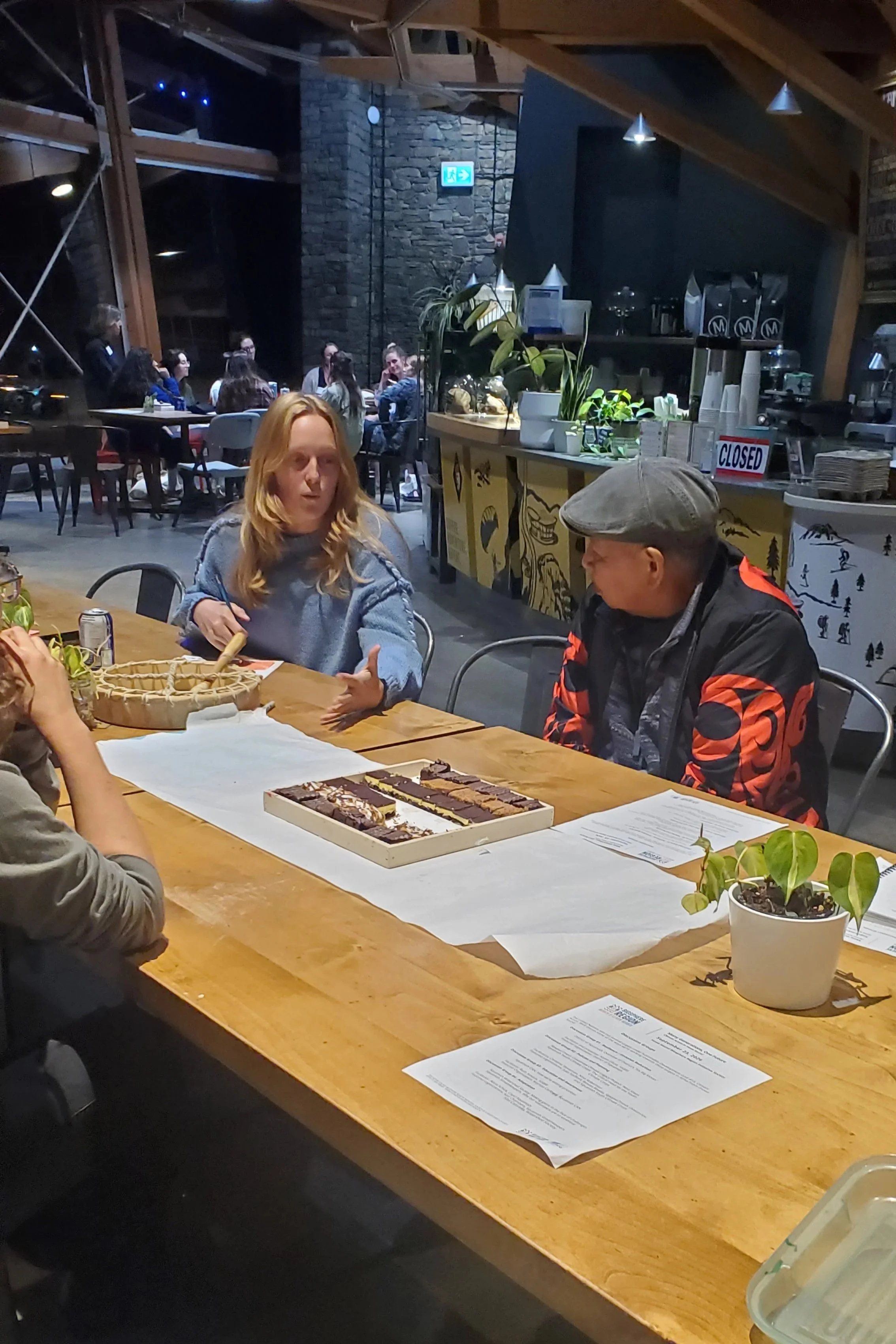
HSBRIS’ M/C and event coordinator, Cheryl Cameron, prepared the nourishment for the event, which took place over dinner.
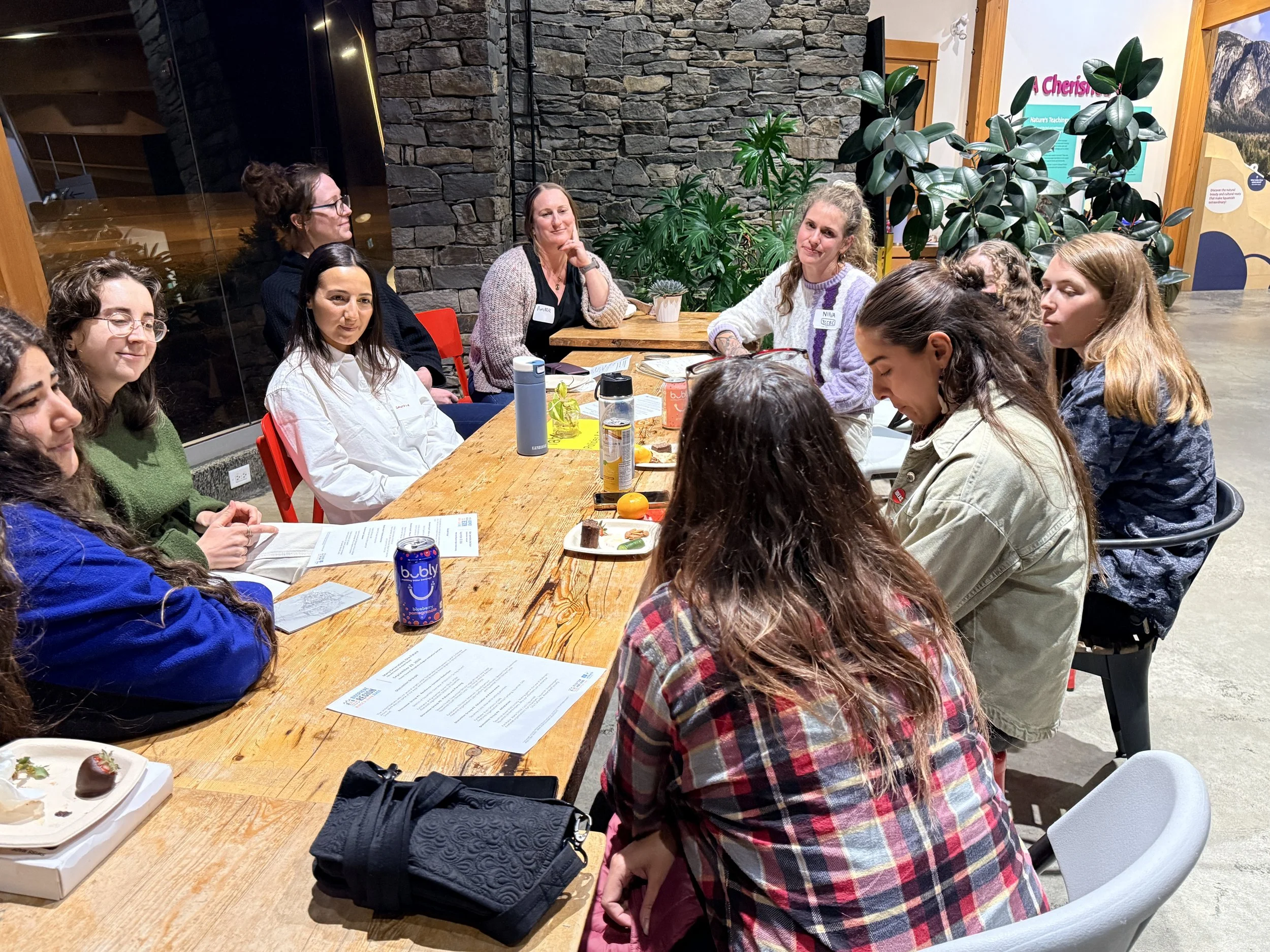
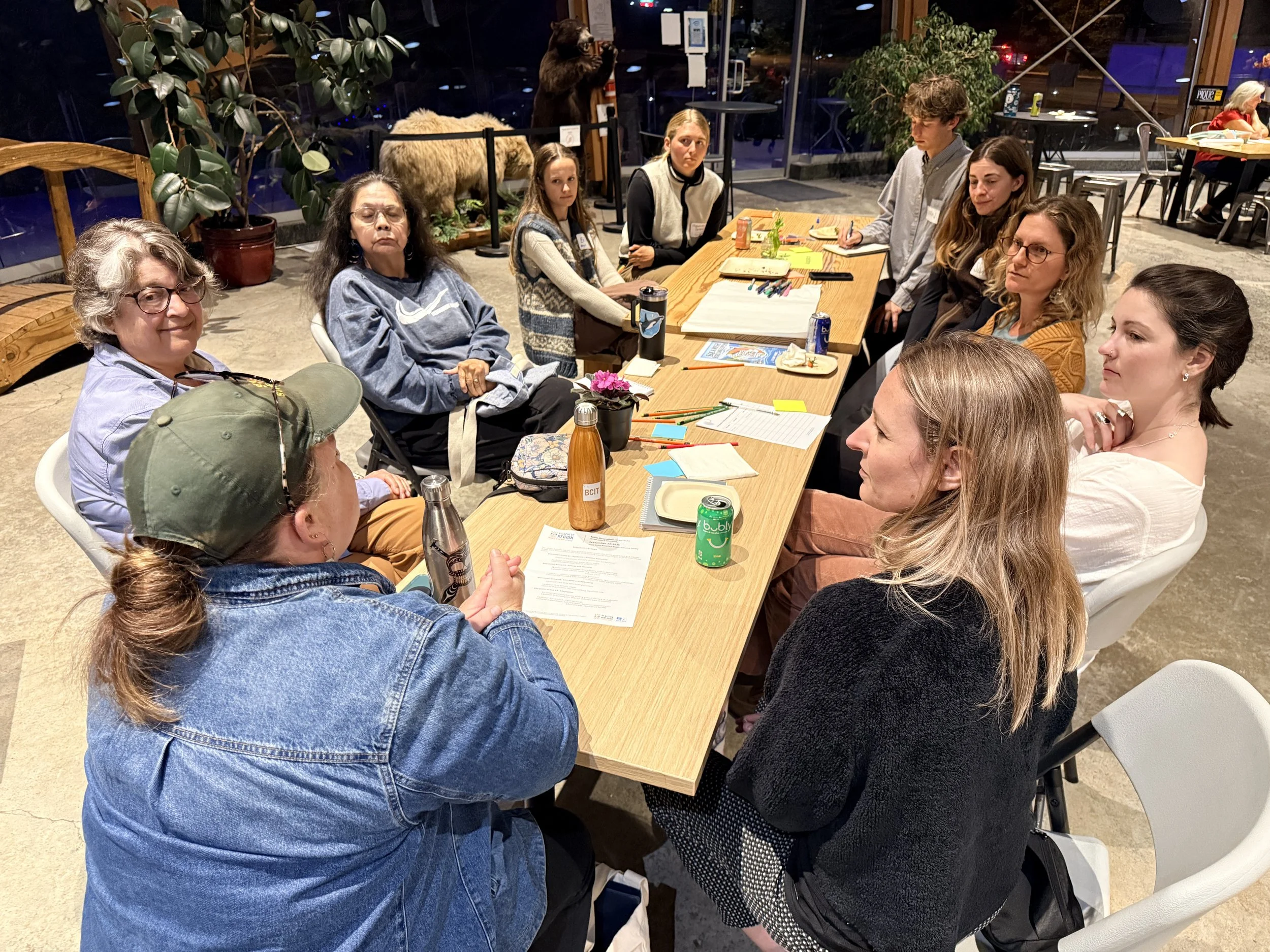
The rest of the evening was spent in conversation, crossing generations, at tables hosted by each presenter. The main themes emerging were the need to engage more people, find resources to meet education demands, and secure more funding. Each group offers opportunities for jobs and volunteers. People are encouraged to follow them on social media, join as a member, and show up to help.
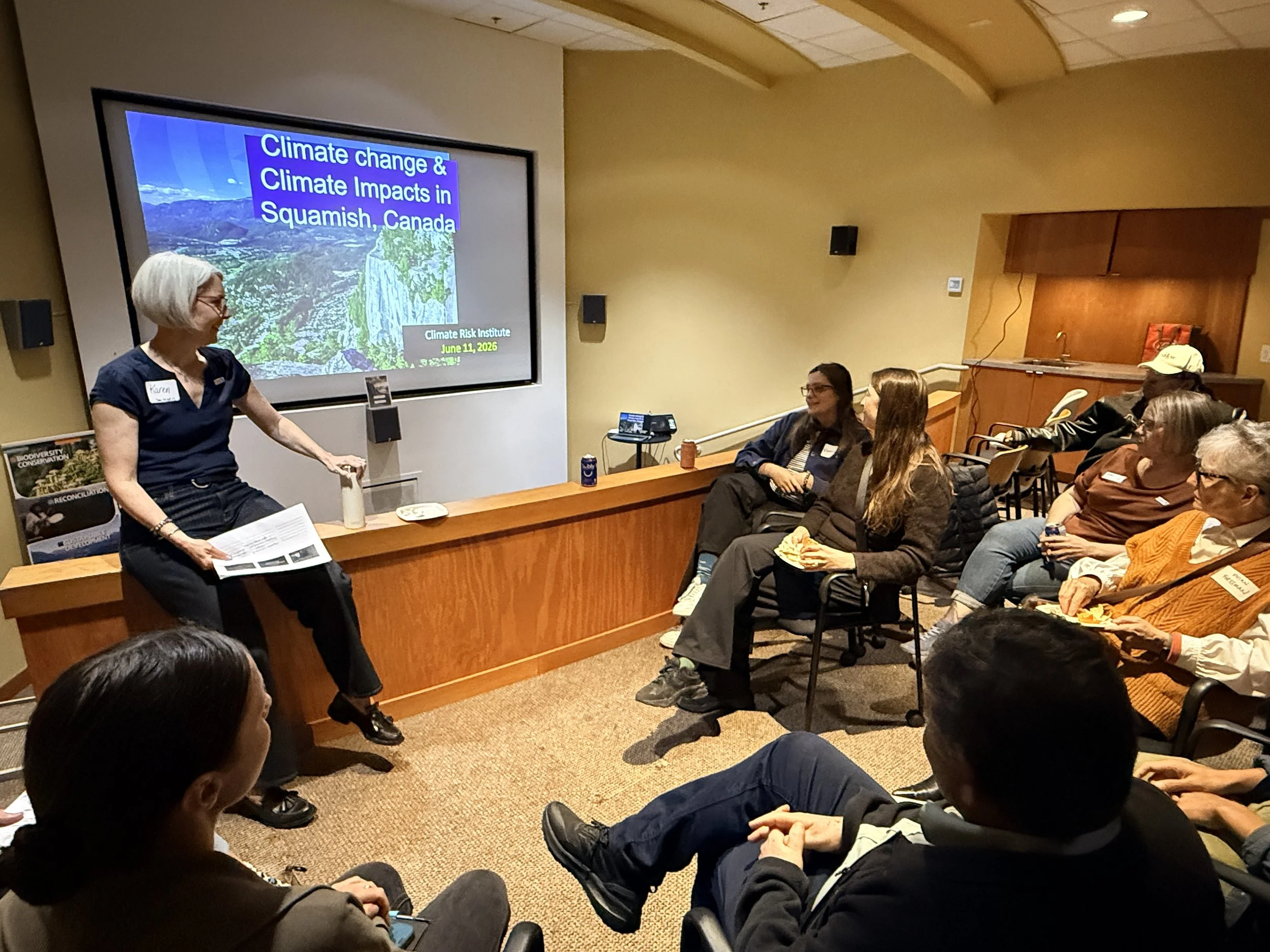
Karen Elliott shared an overview of actions and results seen at the District of Squamish since the introduction of the Six Big Moves.
UN SDG Climate Action #13 lists simple ways people can take action. Hosting events like this builds awareness and understanding and inspires ways to engage and connect to the bigger efforts that start at home and at the community level. Many thanks to the Mowat Family Foundation for its financial support in hosting this event.