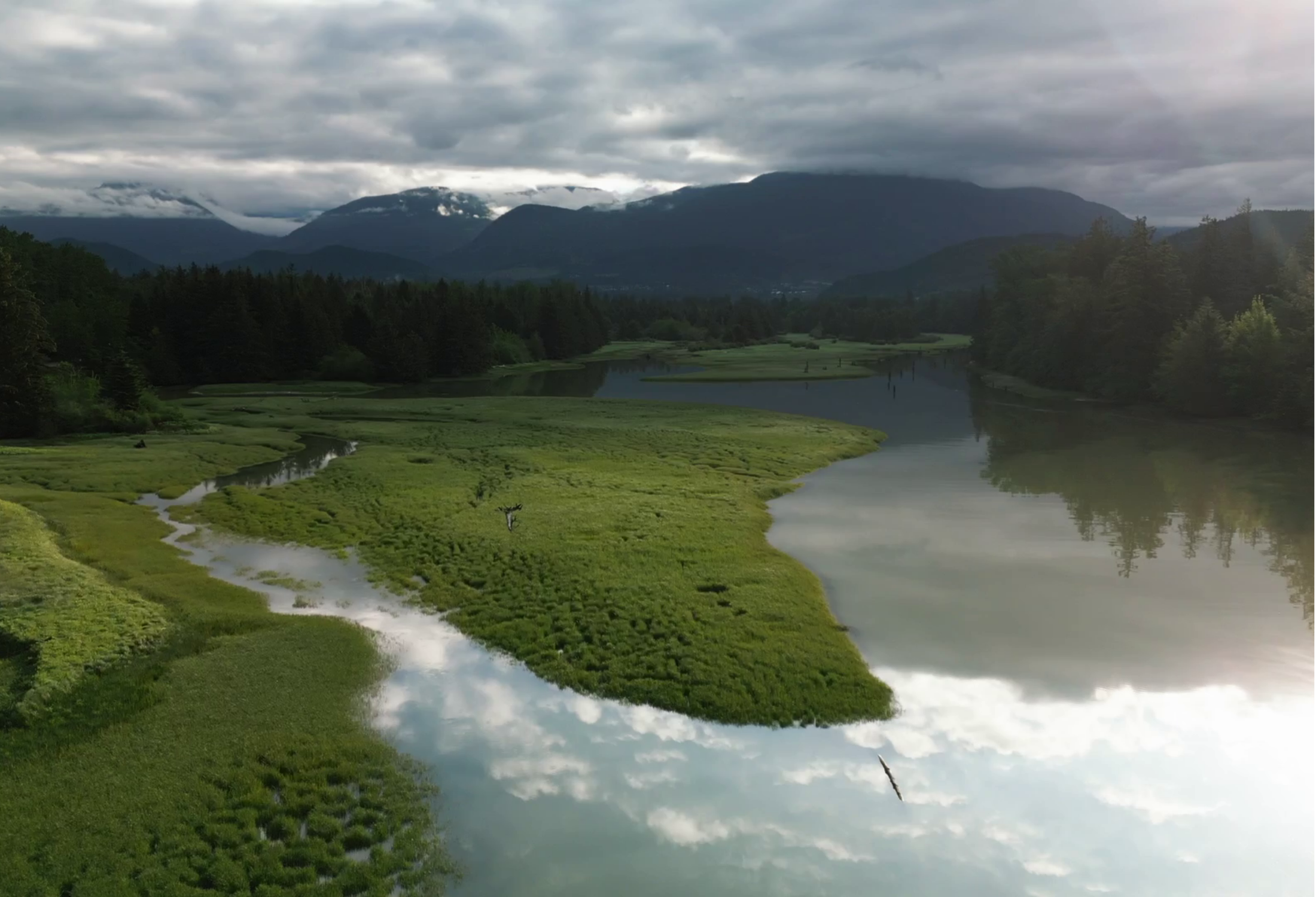


The Átl'ḵa7tsem/Howe Sound UNESCO Biosphere Region, with its marine and terrestrial realms stretching from ocean floor to alpine peak, offers a wide range of opportunities for place-based learning. These opportunities can support the journey to better appreciate, understand and respect biodiversity conservation, the need for sustainable development, and reconciliation with the land and Indigenous Peoples.
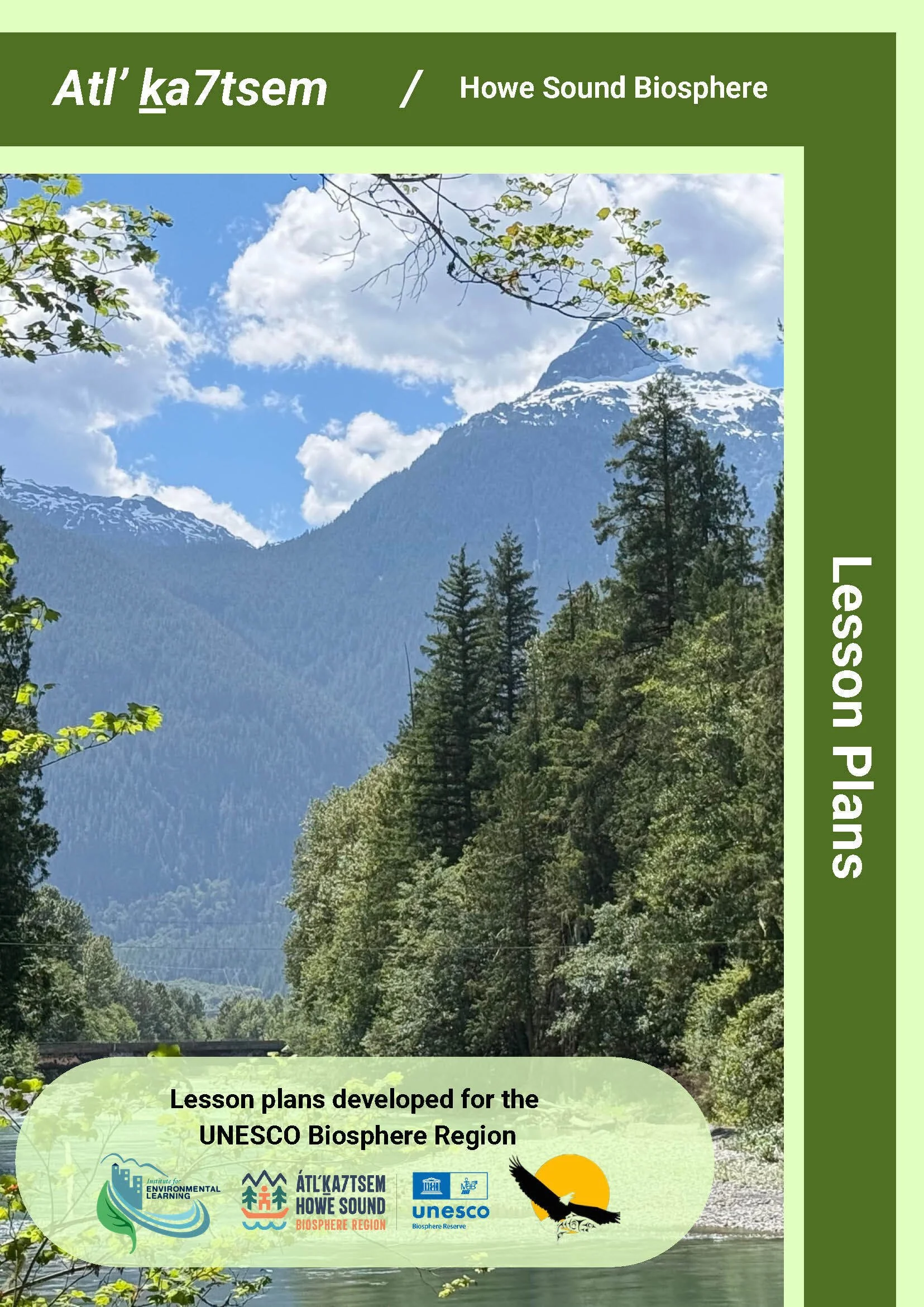
Cohorts of the Institute for Environmental Learning (IEL) at Simon Fraser University create lesson plans at the end of their annual Átl'ḵa7tsem (Howe Sound) Field School. Leading the field schools is Founding Director, Dr. David Zandvliet, a Professor and UNESCO Chair in the Faculty of Education at Simon Fraser University in Vancouver. Dr. Victor Elderton has been a contributing participant of the IEL since its inception. He was a teacher and Principal Co-Administrator for the North Vancouver Outdoor School (re-branded as the Cheakamus Centre), and is a member of various environmental, education and sustainability committees and working groups. He is a founding Director of Pacific Foundation for Understanding Nature Society.
We endorsed these lesson plans and thank the contributors for sharing these resources here.
How to Use the Resource List
The resources below are grouped by age. Click the (+) on each drop-down list to find the available resources. You can also visit our place-based learning page to find links to organizations in the biosphere region offering, or demonstrating, inspiring environmental education.
We welcome your feedback. Please contact us if you have comments, find errors or have questions.
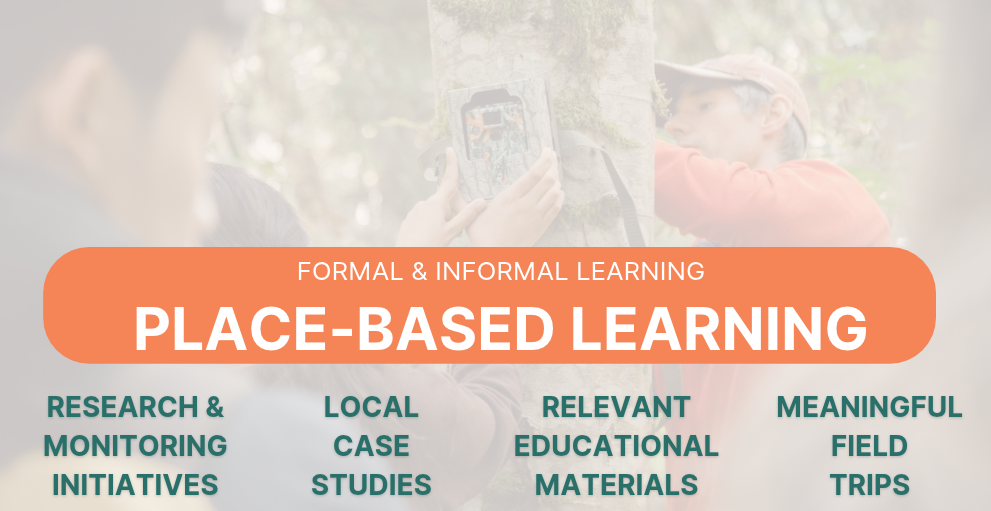
Why Átl'ka7tsem / Howe Sound?
A Living Learning Lab
With approximately 55,000 people living in the Howe Sound area and on the edge of a metropolis, the biosphere region provides a unique ‘learning lab’ situation that connects people and nature. With the return of marine life following decades of industry and many environmental organizations actively working on biodiversity conservation, there are many case studies, field sites, and experts to draw from. Earn your Biosphere 101 certificate by taking our online course.
Appeal to Environmental Educators
We provide Átl'ḵa7tsem / Howe Sound case study lesson plans from environmental leaders at Ocean Wise, written for middle and high school levels. Students can see how ecosystems, species, human impact, and climate change connect.
-
* Content has potential to transfer to other locations
K Science - Plant Walk Sp’akw’us Feather Park / Squamish Estuary: First Peoples’ uses of plants and animals *
K Science/Art - Life Beneath One Ocean: Field trip to Porteau Cove and hands-on art activity *
G1 Science/Art - Trees and Leaves - Cheakamus Centre: building connections with living things *
3-4 Science - Exploring Biodiversity in Lighthouse Park: interspecies relationships *
-
* Content has potential to transfer to other locations
G3-5 Science Sit Spots at Porteau Cove: building observation and reflection skills *
G6 - Math - Squamish Estuary: data collection and pattern spotting *
G6-8 Science/Social Studies - Living in Harmony: field trip to Squamish Estuary and building stewardship connections *
G6-7 Science/Social Studies - Colliding Interests Reclaiming and Rebuilding Skwelwil’em: informing stewardship today with lessons from the past
-
* Content has potential to transfer to other locations
G10 Science - Biodiversity in Living Things: connecting salmon to life sciences at the Squamish River *
G10 Science/Art Capturing the Essence of a Plant: applying art to nature at Alice Lake Provincial Park *
G11 Environmental Science - Ecosystem Restoration: plant walk and cleanup at Squamish Estuary *
G11 Life Science - Dichotomy of Nex̱wlélex̱wn: plant identification on Bowen Island *
G11-12 Geography - Expressing Community and Justice through Place: assessing sense of place at Sp’akw’us Feather Park
G11 Life ScieeExploring The Flora Diversity Of Nex̱wlélex̱wm: plant identification on Bowen Island *
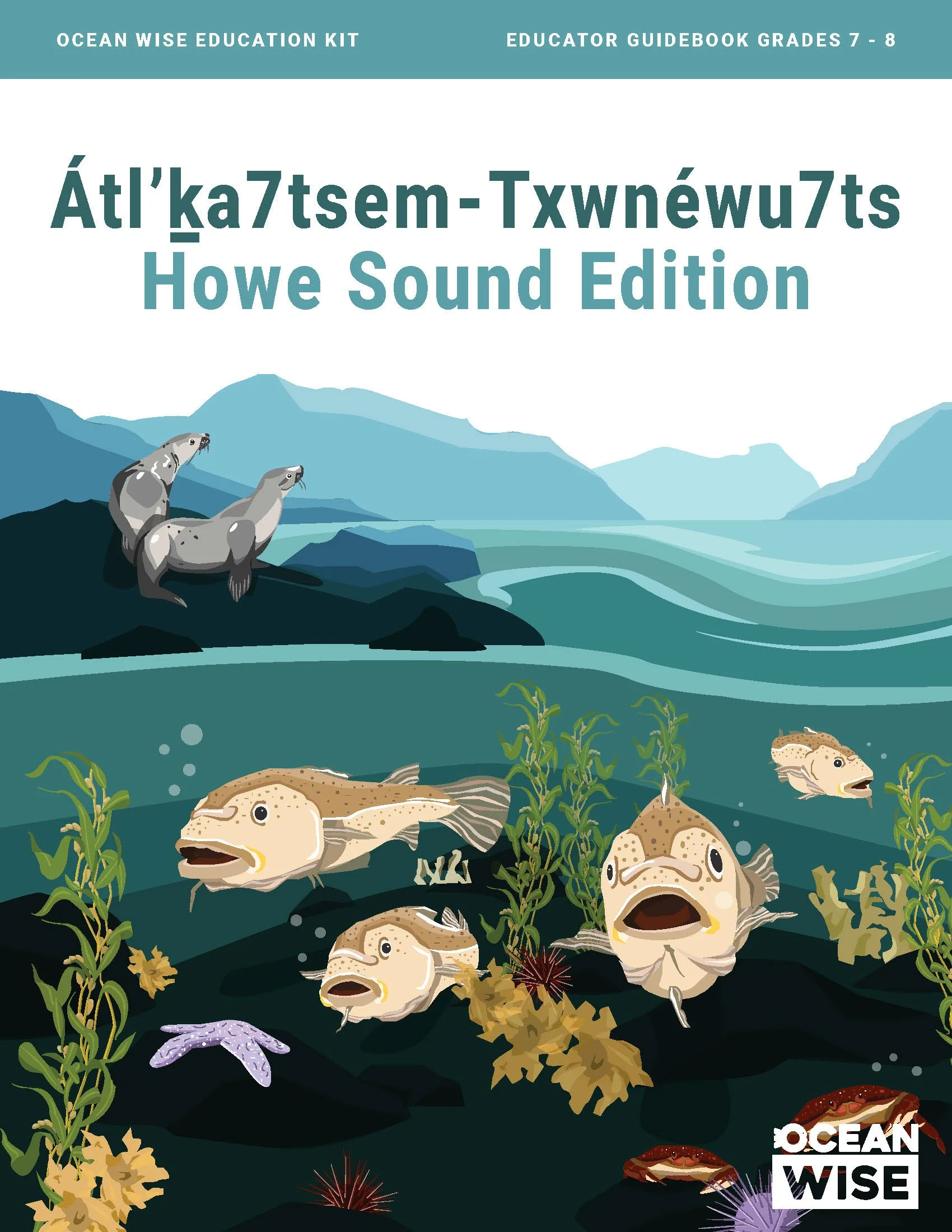
Middle School and High School: Oceanwise Átl’ḵa7tsem / Txwnéwu7ts / Howe Sound Education Kit containing curriculum connections, educator guidebooks and student workbooks .
-
Item descriptionThe UNESCO Associated Schools Network (ASPnet) connects nearly 10,000 schools in 167 countries around a common goal: building peace in the minds of children and young people. Through concrete actions, member schools promote the ideals of UNESCO valuing human rights and dignity, gender equality, social progress, freedom, justice and democracy, respect for diversity and international solidarity. The Network operates at international and national levels with three clear priorities: education for sustainable development, global citizenship education and inter-cultural and heritage learning.
Interested in becoming an associated school? The BC Provincial Coordinator for BC Network is led by Susan Hall. Contact Susan here.
-
Education for Sustainable Development empowers people with the knowledge, skills, values, attitudes and behaviors to live in a way that is good for the environment, economy, and society. It encourages people to make smart, responsible choices that help create a better future for everyone.
UNESCO’s ESD for 2030 programme produces and shares knowledge, offers policy guidance and technical support to countries, and implements projects on the ground. It fosters peer learning and innovation through information, networks and partnerships.
Within this framework, UNESCO hosts the Secretariat of the Greening Education Partnership which aims to strengthen countries’ capacity to provide quality climate change education and ‘green’ every aspect of learning.
Learn more here: https://www.unesco.org/en/sustainable-development/education
A few great examples:
Marine Life Sanctuaries Society—Beach Interpretation Program
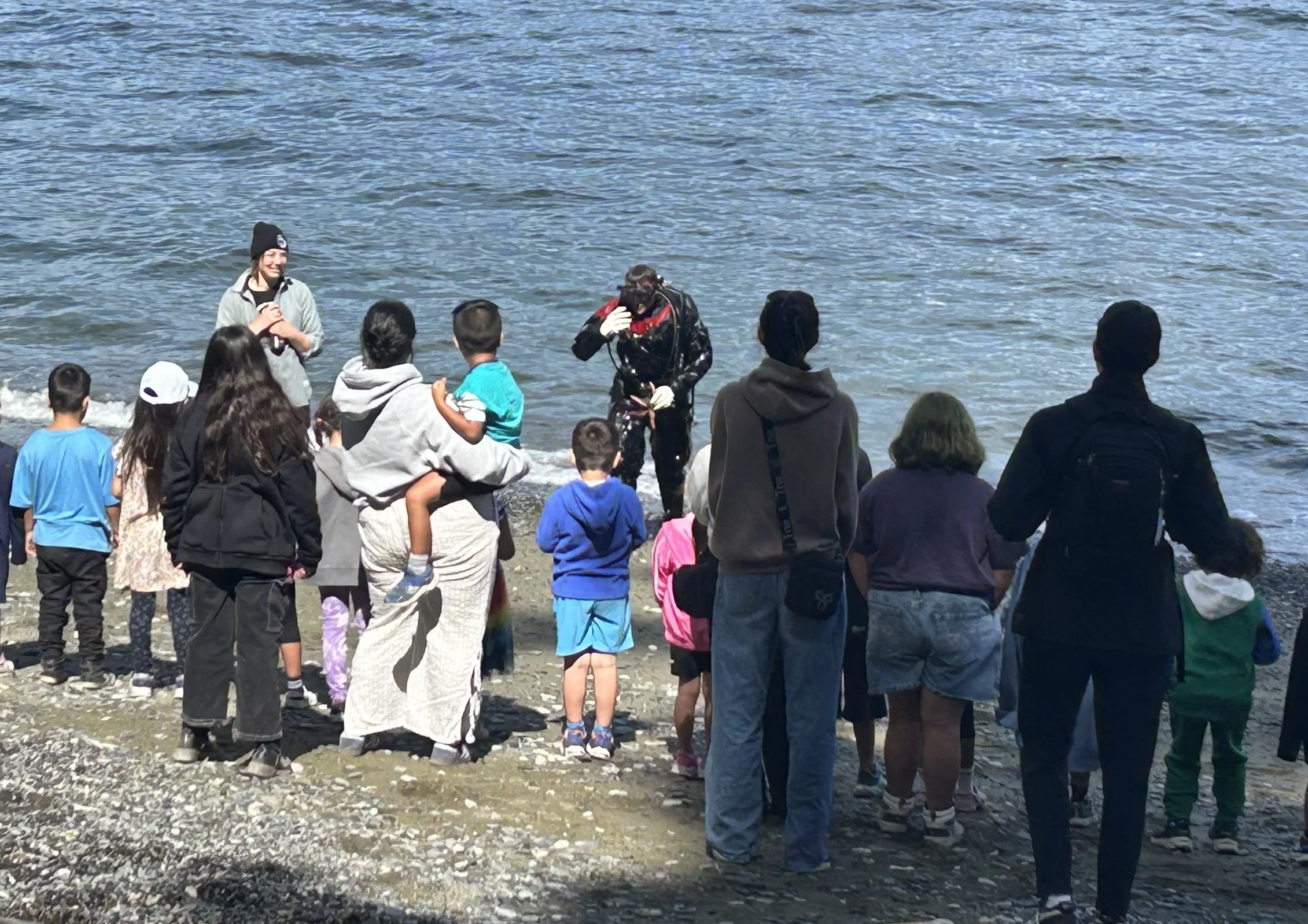
The MLSS beach program is a thrilling program bringing together volunteer divers and youth from Sḵwx̱wú7mesh (Squamish) Nation Elementary Schools to—temporarily and gently—bring marine life from below the water to the beach for youth to explore. Students and educators are able to see what lives below the surface, combined with cultural and language learning. Students also explore their surroundings on a ‘beach walk’ to discover what lives in the intertidal zone. Indigenous leaders share knowledge, language and history through storytelling. Funding dependent, there is opportunity to expand the program to other schools and the public. To learn more, visit their Beach Interpretation Program page.
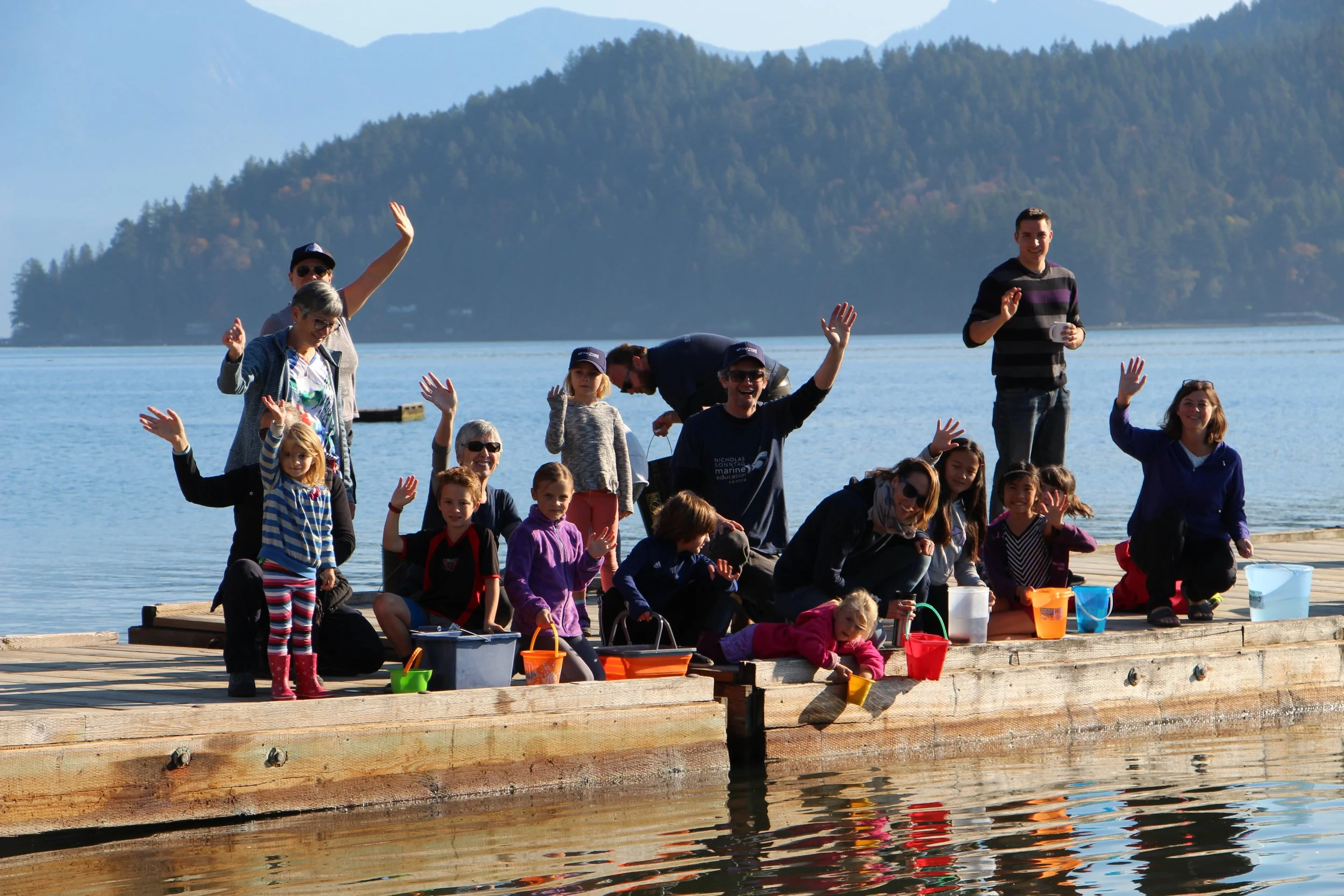
Nicholas Sonntag Tidepools Aquarium
This fantastic collect-and-relsease aquarium at the Gibsons Public Market is part of the BlueAct Marine Society. Beyond a visitor space for the public, Tidepools offers kids’ camps and school and group programs, providing place-based education, hands-on activities and an inspiring way to encourage youth to care about our local marine environment and conservation. To learn more, visit their website or sign up for their Vitamin Sea newsletter.
Squamish CAN—Edible Gardens
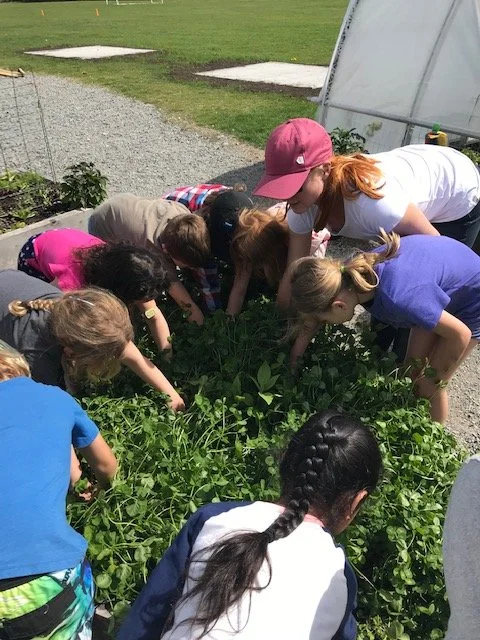
With a focus on building literacy and empowerment around food security, Squamish CAN operates 5 edible elementary school gardens and one school farm in Squamish. Students receive weekly half-hour garden programs from Squamish CAN’s garden educators in spring and fall, where students receive hands-on education providing tangible results—students grow, harvest, prepare and eat vegetables and herbs. Grade 10 students have the opportunity to select the Board Authority Authorized (BAA) certified Farm Studies elective at Howe Sound Secondary, working on the Downtown School Farm, combining it with classroom studies. To learn more about how they created a BAA course, you can watch a webinar they presented for Farm to School BC.
Cheakamus Centre
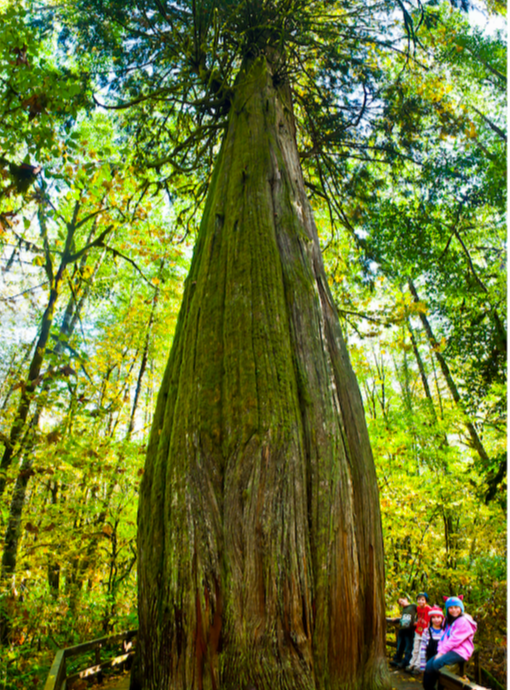
Situated at Ch’iyáḵmesh (meaning ‘people of the fish weir’), this environmental learning centre on 165 ha of lush coastal forest is protected in perpetuity by a Nature Conservancy of Canada conservation covenant. Part of the North Vancouver School District 44, the Centre offers field school programs not only to SD44 students, but also to school, youth and community groups from all over. With a focus on conservation and Sḵwx̱wú7mesh (Squamish) Úxwumixw culture, the site features restored salmon spawning channels and hatchery, old-growth trees and a Coast Salish Teaching Longhouse. Programs are fully immersive, with groups often staying overnight. The Centre also provides a unique setting for nature-based workshops, meetings and events. To learn more about its programs and facilities, visit their website.
Leave a lasting impact. Your gift supports stewardship, education, and ecological resilience for years/generations to come.
It’s a powerful way to protect the place you love - now and forever.