November 29, 2025 Roundtable #4
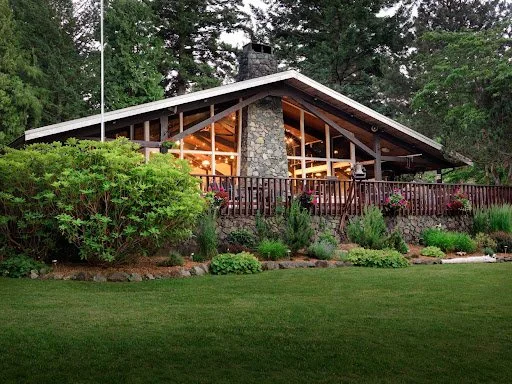
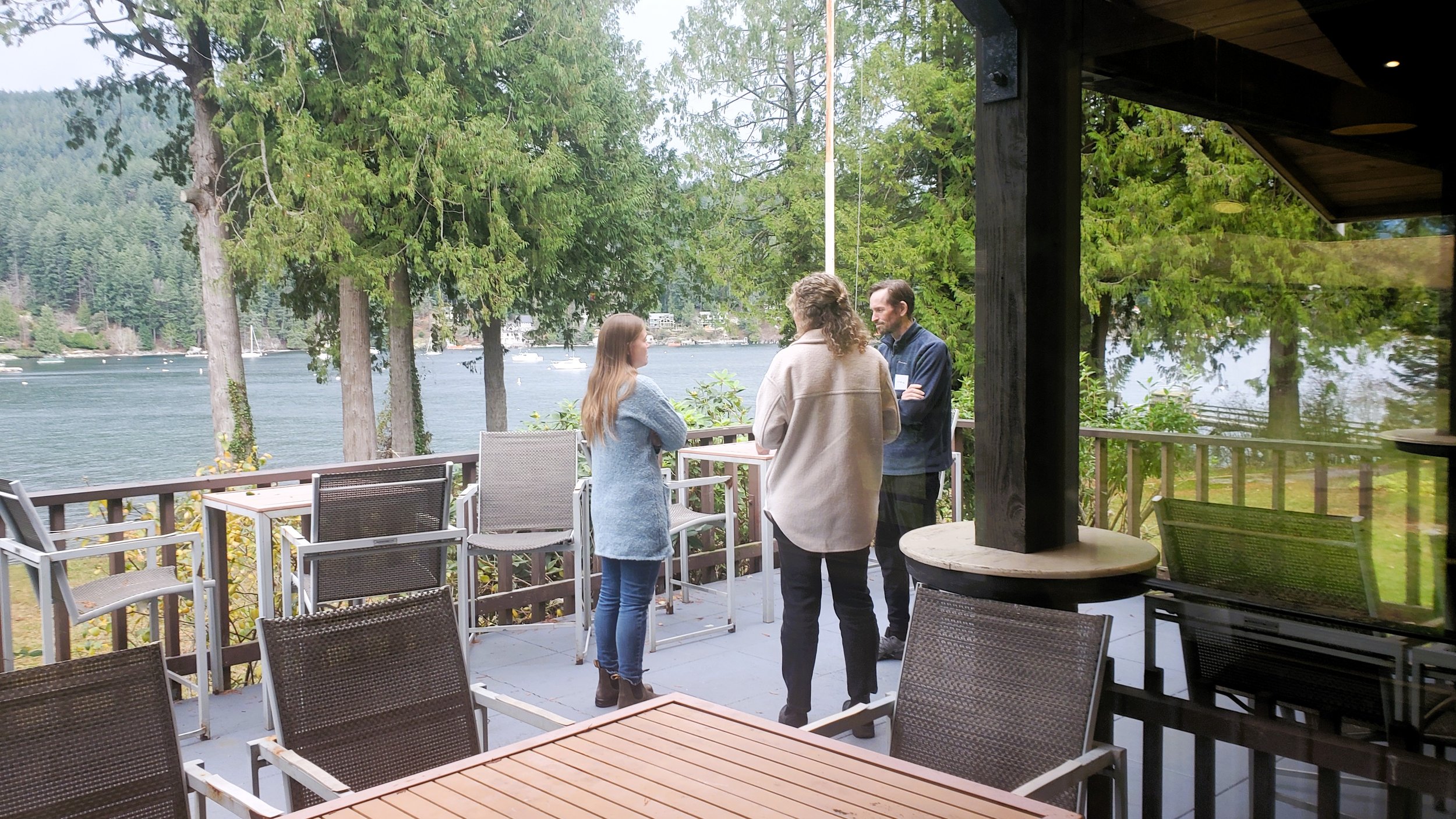
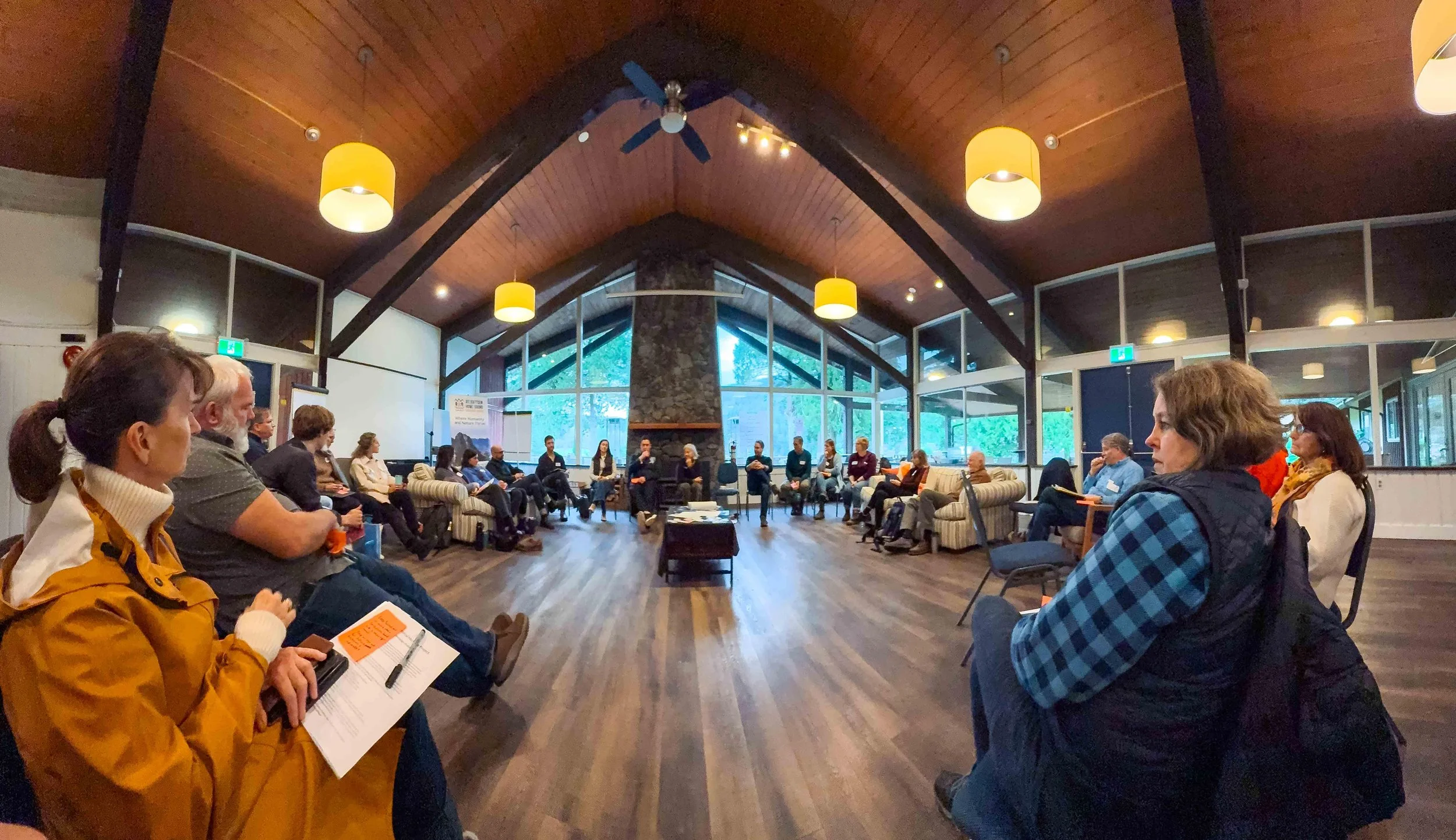
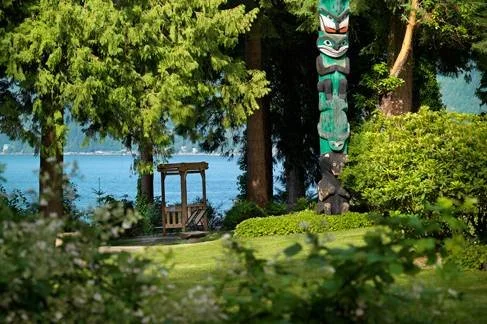
It was a calm crossing to Nexwlélexwm/Bowen Island on Saturday, November 29th, 2025, for our 4th Roundtable meeting at the Bowen Island Lodge. With subdued light typical of November, the Lodge provided a cozy setting with views of Kwilákm/Mannion Bay and the sounds of Sea Lions from across the Bay. Several members shared their personal connections to the Lodge that was built in the 1960s. It has been known as CNIB Lodge (Canadian National Institute for the Blind) as a retreat and training center for visually impaired British Columbians, continuing Bowen's legacy as a welcoming spot for the blind since 1902. Change in ownership in 2010 has not altered the vintage look and feel of this historic property.
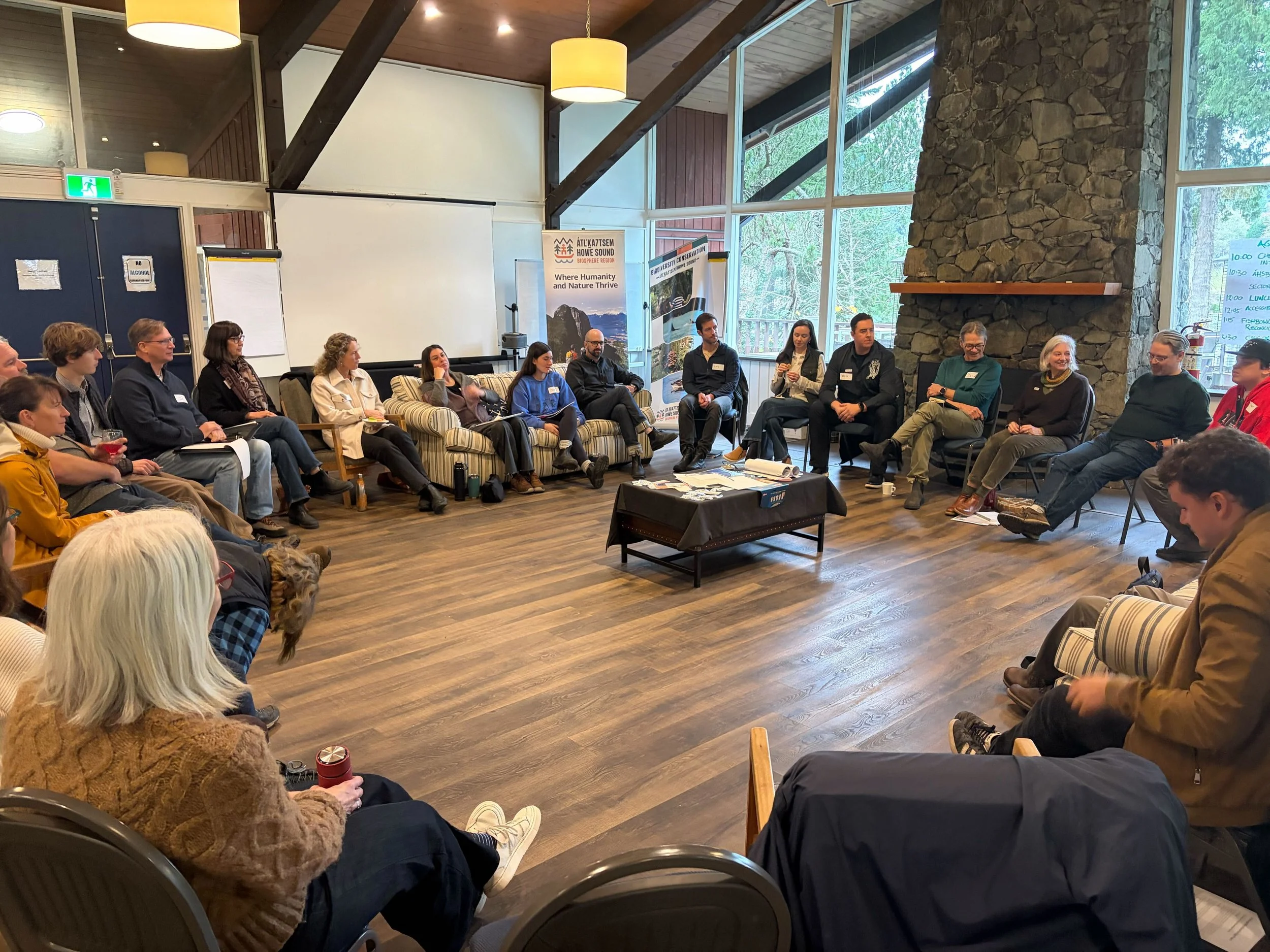
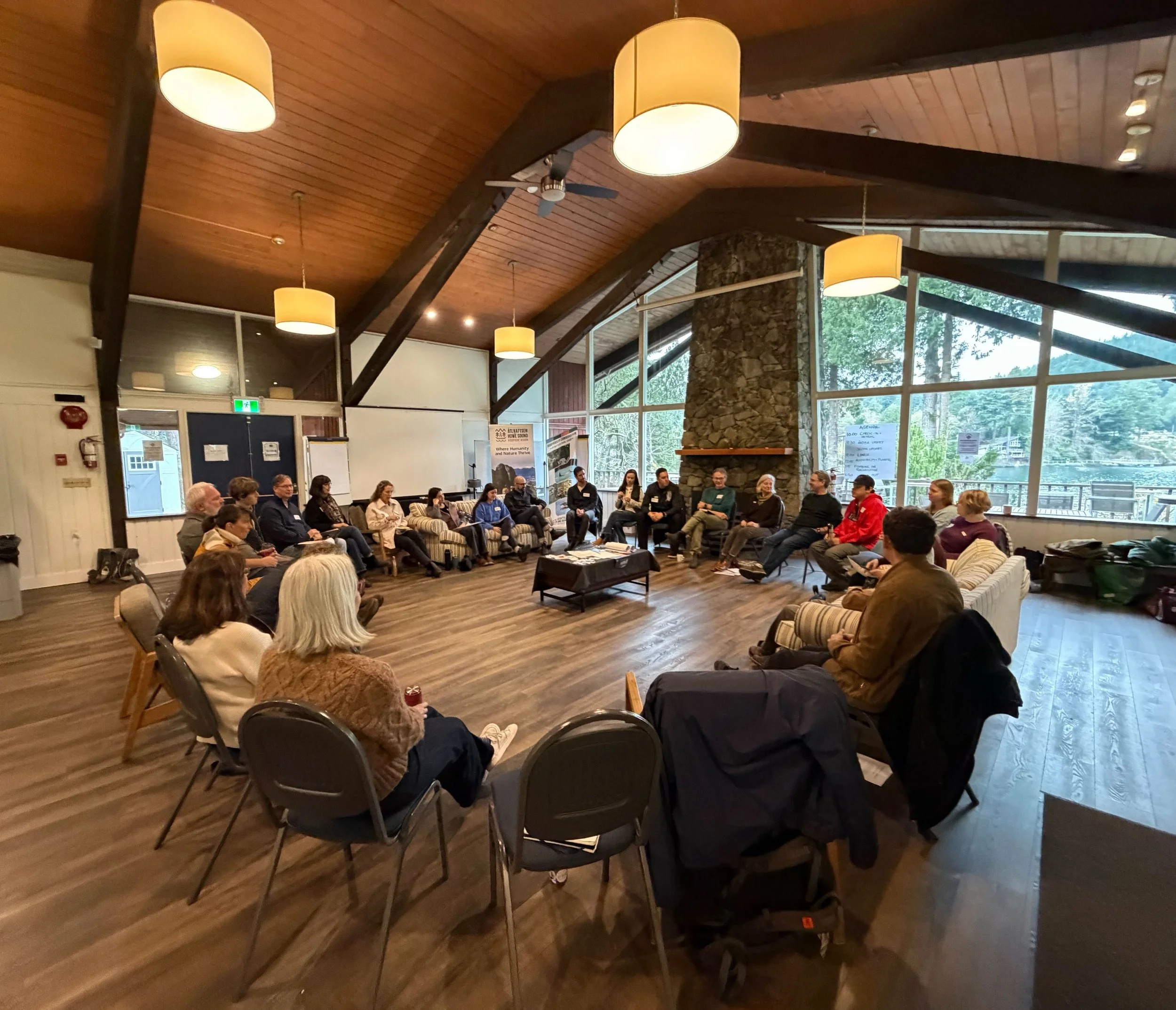
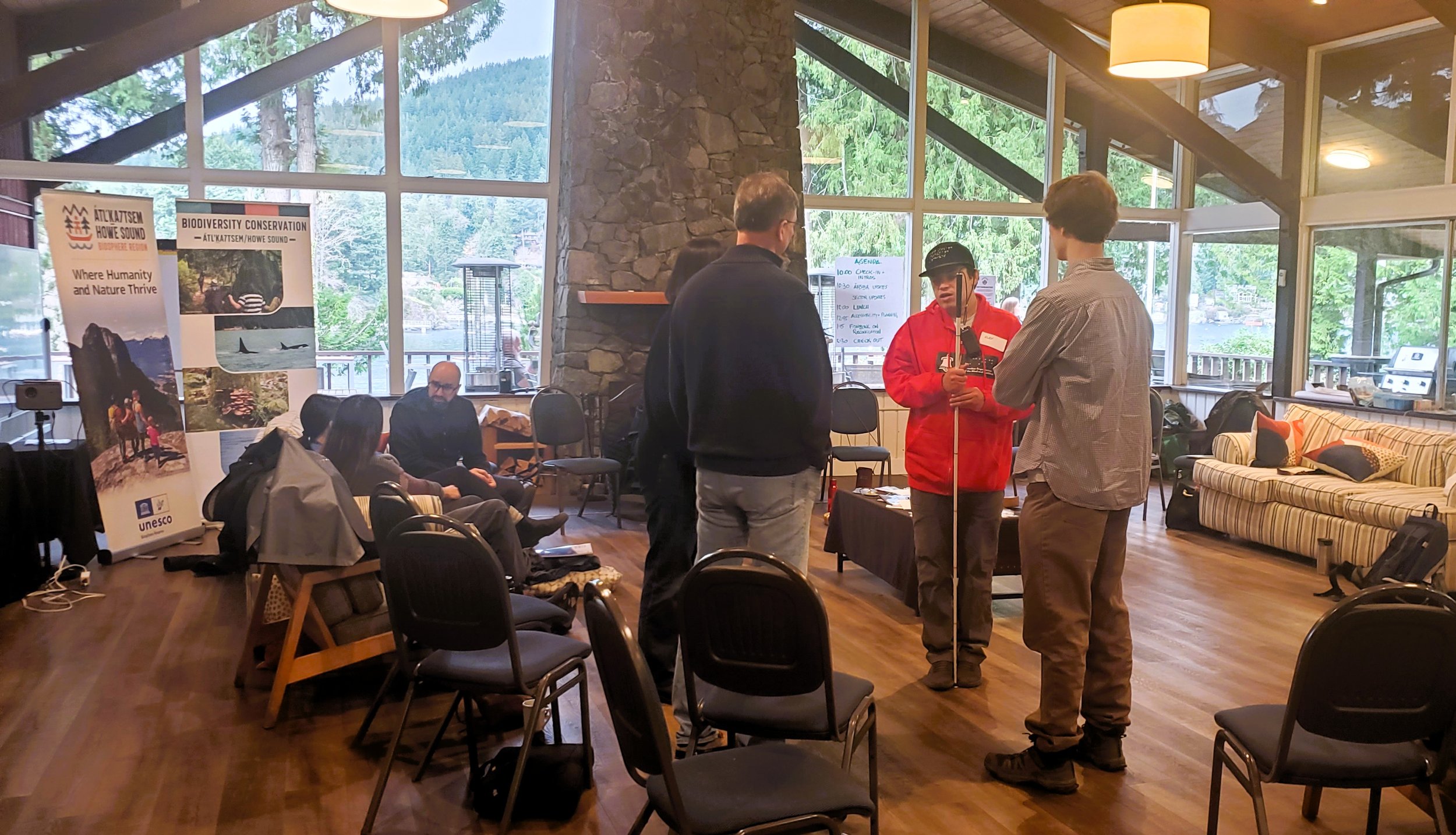
Returning and new members participated from Bowen Island, the Sunshine Coast, Vancouver, the North Shore, Squamish and the Sea-to-Sky corridor. Chris Corrigan, Harvest Moon Consulting and Sam Wing co-facilitated for the day. Chris is a long-time resident of the island. We welcomed Alex Jurgenson, an elected Bowen Island Council member and longtime advocate for the blind, who shared the history and value of camps as safe spaces for communities of people with shared challenges. Today, Alex’s role on Council has contributed toward Bowen Island Municipalities’ 2025-2028 Accessibility Action Plan adopted by Council.
Ruth Simons shared updates on actions taken by the Howe Sound Biosphere Region Initiative Society (HSBRIS) over the past six months, following recommendations from previous Roundtable meetings. Sam Wing, HSBRIS’ Project Manager, spoke about UNESCO Biosphere Reserves’ global commitment to engaging youth within each biosphere and the many opportunities to participate. We heard that several local governments have long-established youth councils and committees, and Volunteer Canada and the Federal government have made commitments that could bring new funding opportunities.
We heard updates from each sector. Forestry, residential development, academia and environmental educators all experiencing negative impacts of the current economic and political changes. The tourism sector stood out as strong this past summer, with a steady flow of visitors from the US and all over the world. Government sectors face challenges in advancing strategic plans, and budget cutbacks have created job uncertainty for staff involved in conservation planning. Uncertainty around funding for conservation has the conservation sector preparing to rely more on volunteers. We spoke briefly about the strong technology sector and emerging AI developments. Multi-sectoral experience in the room is valuable for understanding the challenges of steering the Biosphere towards its priority goals.
We enjoyed a buffet lunch and some fresh air, and after lunch we continued our dialogue with a focus on Reconciliation, Equity and Inclusion. After hearing from Alex about the importance of accessibility planning in communities, we heard about the various programs, such as Age-Friendly Cities and the Coalition of Inclusive Canadian Municipalities.
With the historic agreements being made between the Province of BC and First Nations making headline news, we broke into small groups to discuss how members are holding these conversations with friends and in the community. The District of Squamish signed an MOU with the Squamish Nation, and the Province has completed a Land Use Planning agreement with the Nation this past year, making huge strides towards reconciliation.
We wrapped up the day with next steps and what everyone is committed to doing, as captured in the detailed notes. The next Roundtable meeting will take place in May 2026.